


What Does Gas Safety Check Include?

If you are booking an inspection for the first time, it is fair to ask what does a gas safety check include and what an engineer is actually looking for. A proper gas safety check is not just a quick glance at the boiler. It is a series of checks on appliances, pipework, ventilation and flues to make sure everything is working safely and meeting the standards expected for the property.
For homeowners, that means peace of mind that your boiler, cooker or fire is not putting your household at risk. For landlords and property managers, it is also about compliance, record-keeping and making sure tenants are protected. In commercial settings, the same principle applies, but with more emphasis on continuity, risk control and keeping operations running without avoidable disruption.
What does a gas safety check include in practice?
A gas safety check usually covers every gas appliance and fitting that the engineer has been asked to inspect, as long as they are accessible. In a typical domestic property, that might include the boiler, gas hob, gas oven and gas fire. In a rented property, it will usually focus on all landlord-owned gas appliances and associated pipework.
The engineer will check that each appliance is suitable for use, installed correctly and operating as it should. They will also look for signs of wear, poor combustion, unsafe flueing or inadequate ventilation. If something is immediately dangerous, they are required to act on it and explain clearly what needs to happen next.
That is why two checks can take different amounts of time. A straightforward flat with one modern boiler is very different from a larger house with an ageing fire, older pipework and several appliances. The purpose is the same, but the work involved can vary.
The appliances themselves are tested for safe operation
The first part of the check is usually the appliance condition and performance. The engineer inspects the appliance visually and then carries out operational checks. They are looking for faults that could make the appliance unsafe, inefficient or unreliable.
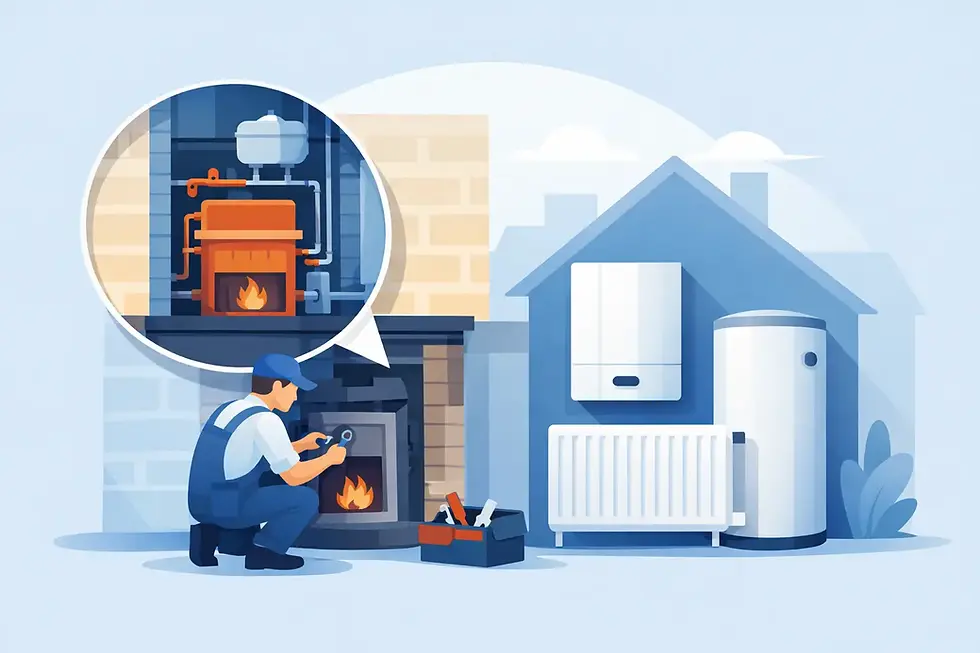
This includes confirming that the appliance lights properly, burns correctly and shows no obvious signs of damage, misuse or unsafe alterations. Casing seals, burner condition and flame appearance may all be assessed depending on the appliance type. On a boiler, the engineer may also check that safety devices are working and that there are no visible issues that could affect combustion.
It is worth noting that a gas safety check is not always the same as a full boiler service. A service is generally more detailed and maintenance-led, while a gas safety check is focused on legal and safety compliance. Sometimes customers assume they are getting both at once, but that depends on what has actually been booked.
Gas tightness and leak checks
One of the most important parts of any gas safety inspection is checking for leaks. The engineer will test the gas installation to make sure the system is gas-tight and not losing pressure in a way that suggests an escape of gas.
Even a small leak can become a serious risk if left unchecked. Gas escapes can lead to fire, explosion or illness, so this part of the inspection is never something to treat lightly. If a leak is suspected or found, the engineer will explain whether the supply needs to be isolated and what repairs are required.
Flue checks and removal of combustion gases
Gas appliances need to discharge combustion gases safely to the outside. That is the job of the flue. During the inspection, the flue is checked to make sure it is fitted correctly, in sound condition and not blocked or leaking.
This matters because dangerous gases, including carbon monoxide, must leave the building properly. If a flue is damaged, disconnected or poorly installed, those gases can re-enter the room instead. In some properties, especially older ones or those with later building alterations, flue routes need especially careful attention.
Ventilation checks
Gas appliances also need the right amount of air to burn fuel safely. If ventilation is inadequate, combustion can be incomplete, which increases risk. The engineer will check whether permanent vents are present where required and whether they are clear and usable.
This is one area where household changes can create problems without anyone realising. A vent that was acceptable when an appliance was installed may later be blocked, covered or removed during decorating or renovation work. The appliance may still seem to function, but that does not mean it is safe.
Pipework, connections and installation standards
A gas safety check also includes inspection of visible pipework and connections. The engineer is looking for signs of corrosion, poor support, damage or installation issues that could affect safety.
They will check that the appliance is connected correctly and that the pipework appears suitable for the appliance it serves. In some cases, issues are not dramatic but still need attention, such as poor positioning, ageing components or pipework that no longer meets expected standards.
Again, context matters. In a newer property, the system may be fairly straightforward. In an older home, rental property or commercial premises with additions over time, the engineer may need to assess work carried out by different contractors across different years.
What landlords should expect from a gas safety check
For landlords, the check has a legal purpose as well as a practical one. A Gas Safe registered engineer carries out the inspection and, where the appliances pass, issues the gas safety record. This is often referred to as a CP12, although the key point is the record itself and what it confirms.
The check normally covers landlord-owned gas appliances, flues and relevant pipework. If a tenant owns their own gas appliance, that is treated differently, although any concerns spotted during the visit should still be raised. The record will note the appliances checked, the address, the date, the engineer's details and any defects or actions required.
Landlords should not leave this until the last minute. If faults are found, repairs may be needed before the property is fully compliant. Booking early gives time to deal with issues properly, rather than rushing to meet a deadline.
What a gas safety check does not always include
This is where confusion often happens. People hear the term and assume every part of the heating system will be cleaned, serviced and repaired during the same visit. That is not always the case.
A gas safety check is mainly an inspection and test of safety. It does not automatically include full servicing, deep cleaning of components, replacement of worn parts or repairs unless those have been arranged separately. If an appliance fails, the engineer may classify the issue and make it safe, but remedial work may need a return visit.
The same applies to non-gas parts of the system. For example, a general gas safety check is not the same as a full heating system health check, a powerflush or a broader plumbing inspection. Customers get the best result when the scope of the visit is clear from the start.
Why the paperwork matters as much as the inspection
The physical check is only part of the job. The record afterwards matters too, especially for landlords, businesses and managed properties. Good documentation shows what was inspected, whether it passed, and whether any warning notices or recommendations were given.
That helps protect everyone involved. Tenants know the property has been checked. Landlords have proof of compliance. Businesses have a record they can keep on file as part of their wider safety responsibilities. If follow-up work is needed, the paperwork also gives a clear starting point.
A reliable engineer will explain the outcome in plain terms. If something is safe, they will say so. If something needs attention, they should be equally clear about how urgent it is and whether the appliance can remain in use.
Choosing the right engineer for the job
Who carries out the inspection matters. Gas work should only ever be done by a Gas Safe registered engineer with the right qualifications for the appliance and setting involved. Domestic boilers, landlord checks and commercial catering equipment do not all sit under the same scope of work.
For property owners and businesses across North Wales and the North West, working with a company such as Lunar Heating & Gas Services can make the process simpler because the same provider can often support checks, remedial work and ongoing maintenance. That saves time, but it also means faults are dealt with by a team that understands the site and the pressures you are working under.
If you are arranging a gas safety check, the best approach is to treat it as preventative work rather than a box-ticking exercise. Most serious problems start as smaller issues that were missed, ignored or left too long. A proper inspection gives you clarity, and that is often what keeps a home safe or a business moving without interruption.
When you know what the check covers, it becomes much easier to book the right visit, ask the right questions and act quickly if anything needs attention.

Comments