

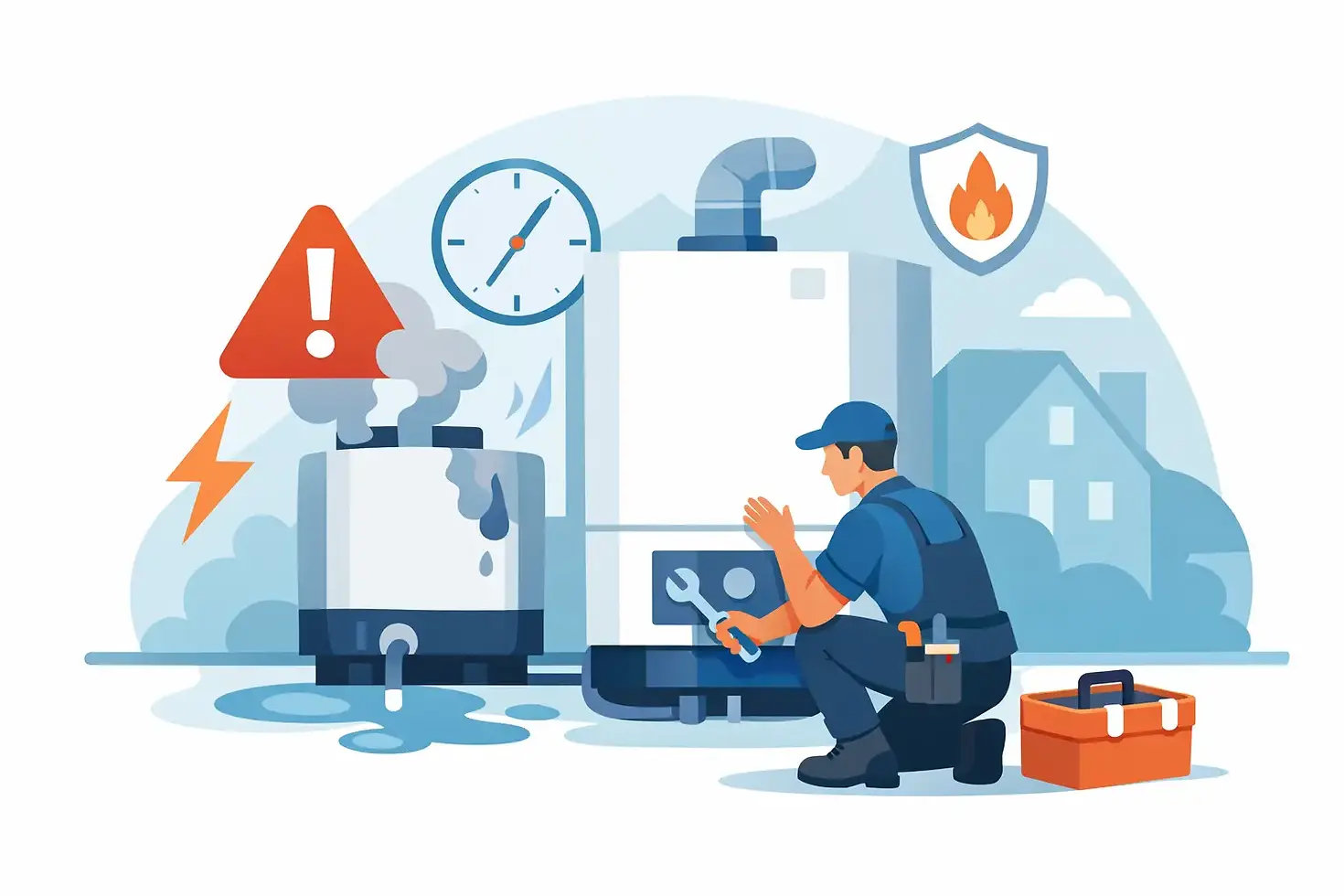
Emergency Boiler Repair: What to Do Fast

A boiler rarely picks a convenient time to fail. It usually happens on a cold morning, before opening hours, or just as tenants start calling to say there is no heating or hot water. When that happens, emergency boiler repair becomes less about inconvenience and more about safety, comfort, and getting normal life or business operations back on track quickly.
The first priority is always to work out whether the issue is simply disruptive or genuinely dangerous. A boiler that has stopped heating water is one problem. A boiler that smells of gas, shows signs of leaking, or is making sudden banging noises is another. Knowing the difference helps you act quickly, avoid unnecessary risk, and get the right engineer to the property without delay.
When emergency boiler repair is urgent
Not every boiler fault needs an out-of-hours response, but some absolutely do. If there is a gas smell, you should not try to inspect the appliance yourself. Turn off the gas supply if it is safe to do so, ventilate the area, avoid using electrical switches, and arrange immediate professional help. Safety comes before restoring heat.
A water leak around the boiler can also become urgent very quickly. Even a small leak can damage walls, flooring, ceilings, or nearby electrics if left unchecked. In commercial settings, it can also create slip risks and disrupt service areas. If the leak is significant, isolate the water supply if you know how, then arrange an engineer visit.
There are also faults that are not immediately dangerous but still qualify as an emergency in practical terms. In winter, a household with no heating and no hot water may need same-day support, especially where there are young children, older residents, or vulnerable occupants. For landlords and property managers, a failed boiler can quickly become a tenant welfare issue. For hospitality and catering businesses, downtime can mean lost bookings, kitchen disruption, and complaints from customers.
What to do before you call for an engineer
A few quick checks can help confirm the problem and, in some cases, save you from an unnecessary call-out. Start by checking whether the boiler has power. A tripped fuse spur, flat thermostat batteries, or a local power issue can sometimes be the cause. If the display is blank, this is worth checking first.
Next, look at the system pressure if you have a pressurised boiler. Low pressure is a common reason for lockouts. Many boilers should sit around 1 to 1.5 bar when cold, though it does depend on the system and manufacturer. If the pressure has dropped, the boiler may need repressurising. That said, if you are not confident doing this, it is better to ask an engineer than risk making the issue worse.
You can also check for obvious fault codes on the display panel. These codes can give a qualified engineer a useful starting point and may help speed up diagnosis. If the condensate pipe has frozen during very cold weather, that can also stop the boiler from working. In some cases, careful thawing resolves the immediate issue, but repeated freezing usually points to a wider installation or insulation problem that should be addressed properly.
What you should not do is open the boiler casing, attempt gas repairs, or keep resetting the appliance over and over. One reset may be reasonable if the manufacturer instructions allow it. Repeated resets are not a fix and can mask a fault that needs proper inspection.
Common faults behind an emergency boiler repair call-out
Boilers fail for different reasons, and the symptoms do not always point neatly to one single cause. Ignition faults are common, especially in older appliances. If the boiler cannot ignite, you will have no heating or hot water even though the unit appears to have power.
Pressure loss is another frequent issue. Sometimes this is a simple top-up. Sometimes it is a sign of a leak elsewhere in the heating system, a failing expansion vessel, or a pressure relief valve issue. If the pressure keeps dropping, there is usually an underlying fault that needs more than a quick adjustment.
Pump problems can stop hot water circulating properly, leading to cold radiators or intermittent heating. Faulty motorised valves, thermostats, sensors, or printed circuit boards can also cause confusing symptoms, particularly where the boiler fires up and then shuts down again.
In commercial buildings, the picture can be more complex. Multiple zones, larger systems, heavy demand, and linked controls mean one fault may affect several areas at once. In restaurants, pubs, hotels, and other hospitality settings, loss of hot water can affect customer facilities, cleaning routines, and food preparation spaces, so response time matters as much as the repair itself.
Why a qualified response matters
Emergency boiler repair is not just about speed. It is about sending the right engineer with the right qualifications. Any work involving gas appliances should be carried out by a Gas Safe registered engineer. That protects the property, the occupants, and the person carrying out the repair.
A good emergency response should include a clear diagnosis, an explanation of the fault in plain terms, and honest advice on whether repair is the sensible option. Sometimes a repair is straightforward and cost-effective. Sometimes a boiler has reached the point where replacing parts no longer represents good value.
This is especially relevant with older boilers that have recurring faults, poor efficiency, or parts that are harder to source. In those cases, an emergency visit may restore service temporarily, but it should also include realistic guidance about next steps. The right advice is not always the cheapest in the moment, but it often saves money and stress over the longer term.
Emergency boiler repair for landlords and businesses
For landlords, speed and documentation both matter. Tenants expect a prompt response, and rightly so. If heating or hot water is lost, especially in colder months, delays can quickly strain relationships and create avoidable complaints. A dependable engineer who can attend quickly, diagnose correctly, and carry out compliant work makes a real difference.
For businesses, the impact of a boiler fault often reaches beyond comfort. Offices may struggle to operate without heating. Hospitality venues may have to reduce service or close parts of the premises. Commercial kitchens and catering businesses can run into hygiene and operational issues if hot water is unavailable. In these situations, flexible scheduling and a practical understanding of business downtime are just as important as technical skill.
This is where a regional service provider with domestic and commercial experience can be particularly valuable. Lunar Heating & Gas Services supports customers across Anglesey, North Wales, and key North West locations, helping homes and businesses get faults dealt with quickly and professionally.
How to reduce the chance of another breakdown
Emergency call-outs often reveal problems that have been building for months. A noisy boiler, slow heat-up times, uneven radiators, rising energy bills, or repeated pressure drops are all signs that the system may need attention before it fails completely.
Regular servicing remains the best way to reduce the risk of sudden breakdowns. It gives an engineer the chance to spot worn parts, combustion issues, leaks, and performance problems early. For landlords, it also helps support compliance and tenant safety. For businesses, it can reduce disruptive downtime during busy periods.
It is also worth paying attention to the wider heating system. Sludge in radiators, poor water quality, ageing controls, and frozen external pipework can all contribute to boiler problems. An emergency repair may get you running again, but a broader look at the system is sometimes needed to prevent repeat faults.
If your boiler has failed more than once in a short period, ask whether the appliance itself is the issue or whether there is a system problem putting extra strain on it. That distinction matters. Replacing one part at a time can become expensive if the root cause is being missed.
Choosing the right help when time matters
When you need emergency boiler repair, you want more than a fast arrival. You want clear communication, transparent pricing, proper certification, and an engineer who understands the urgency without creating unnecessary alarm. That applies whether you are a homeowner with no hot water, a landlord managing multiple properties, or a business trying to keep the doors open.
The best response is practical and measured. Make the property safe, carry out the right checks, and get a qualified engineer involved as soon as possible. A boiler breakdown is always disruptive, but with the right support, it does not have to become a bigger problem than it already is.
If your boiler starts showing signs of trouble, do not wait for a complete failure in the middle of winter or during a busy trading day. Acting early usually gives you more options, less disruption, and a much better chance of keeping your home or business warm, safe, and running as it should.

Comments